The end of the academic year is upon us. It’s time for our annual student recital, where students present one, two, or three pieces they have worked on throughout the year. The pieces represent their level of mastery in performance.
Each year, one student (sometimes there is a tie) earns the distinction of “Most Improved.” Last year, we had a three-way tie. What will it be this year? The winner(s) are announced at the end of the recital, right before our digital wave and our ice cream social.
I look forward to this event every year, as students put their best effort forward and play and listen to beautiful pieces.
The following wee,k we begin a short summer session, dancing around other vacation activities and upcoming activities. Summer is a great time of year, and our June Recital serves as both the kick-off and the end-of-year event. Enjoy!
Good luck to all of my exceptional students. This spring, each student will undertake the RCM Music Theory exam, a significant milestone. Several of you are on track to earn points that will lead to a prestigious trophy. These exams represent serious opportunities to master the material—the key to your success—and to earn the recognition you deserve for your achievements.
Students interested in history might also be interested in preparing for a Music History exam through RCM next year.
Yes, reading music can be considered good preparation for learning math because it involves understanding patterns, fractions, ratios, and time sequences, which are fundamental mathematical concepts that are also present in musical notation; essentially, music can be seen as a practical application of math principles, making it a helpful tool for developing mathematical thinking skills. [1, 2, 3, 4, 5]
Key points about how reading music can help with math: [3, 5]
Fractions and rhythms: Music notation uses fractions to represent note durations, which helps students grasp the concept of fractions in a tangible way. [3, 5]
Patterns recognition: Identifying patterns in musical melodies and rhythms is similar to recognizing patterns in mathematical sequences. [1, 3, 4]
Time signatures: Understanding time signatures in music requires interpreting how many beats are in a measure, which is a foundational math concept. [3, 5]
Critical thinking: Deciphering complex musical notation and translating it into performance requires critical thinking skills, which are also crucial for solving math problems. [2, 4, 5]
Yes, learning to read music can be a good preparation for learning to read traditional text, as both involve decoding symbols to understand meaning, and research suggests that musical training can significantly improve auditory processing skills, which are crucial for reading comprehension; essentially, the brain processes music and language in similar ways, making music a potential training ground for reading abilities. [1, 2, 3, 4]
Key points about how reading music can help with reading skills: [1, 3, 4]
Auditory processing: Music training enhances the ability to distinguish sounds and patterns, which is vital for decoding words in text. [1, 3, 4]
Symbol recognition: Learning to interpret musical notation develops the skill of recognizing symbols and associating them with meaning, a core component of reading. [1, 2, 4]
Sequencing: Music involves understanding rhythmic patterns and sequences, which can transfer to reading fluency and comprehension. [1, 3, 4]
Brain activation: Studies have shown that the areas of the brain used for processing music overlap with those used for language processing, suggesting a potential cognitive benefit. [1, 2, 4]
Yay for all the students and our distinguished guests who performed beautifully, kicking off the holiday season with joy and grace! Thank you to the families, friends, and additional teachers who participated and made it all possible.
Congratulations to my student, Pro, for successfully playing Secondo of the “Diamond Sonatina” by Robert Vandall. The Greater Indianapolis Music Teachers Association hosted the Piano Ensemble, with conductor Zak Tschiniak.
All three movements were played beautifully! Below is a video of movement I.
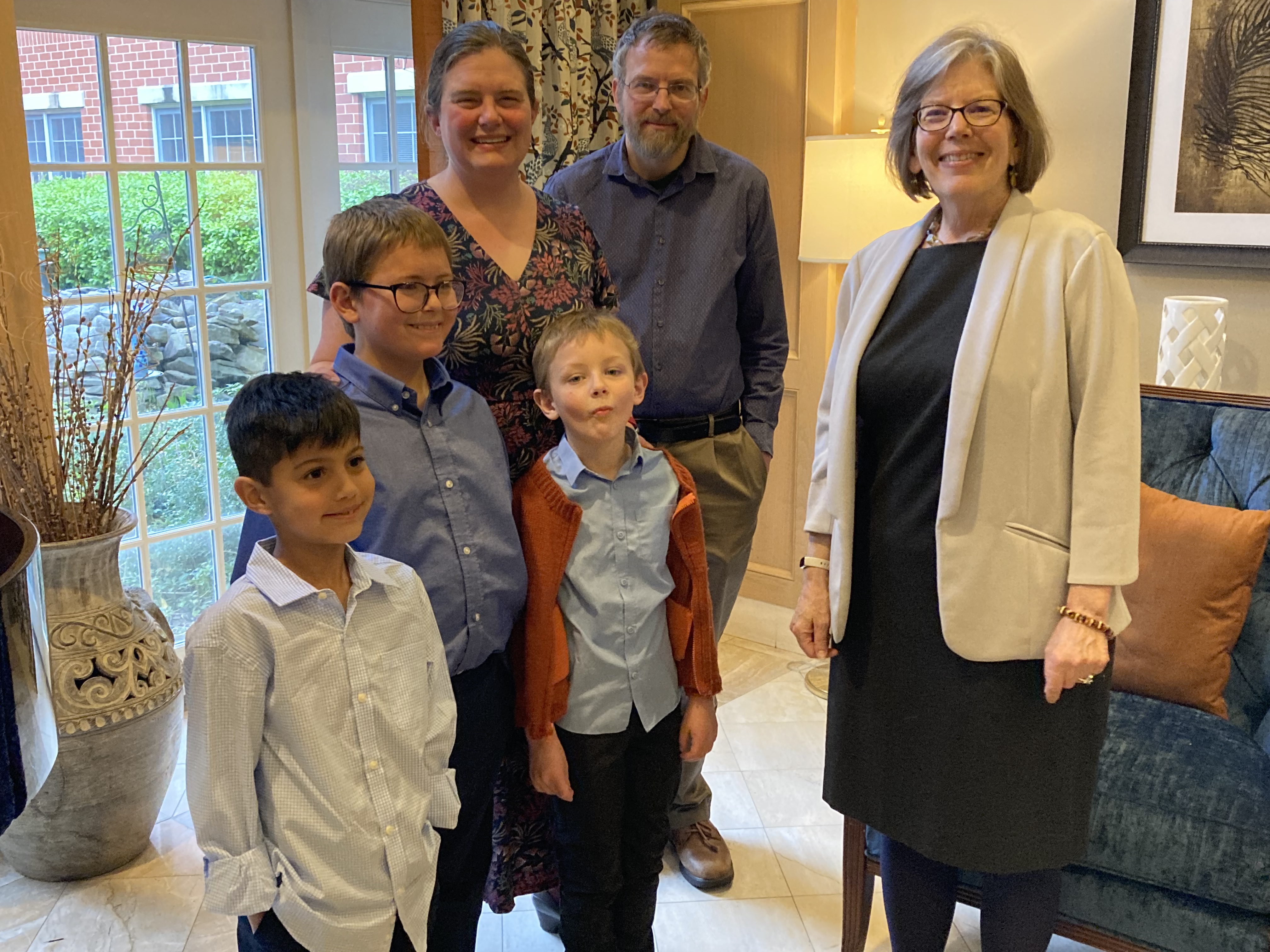
Students from the Donnelly Music Studio participated in two of the six morning and afternoon recitals held during the day. Below are group photos of students and teachers from those two recitals. Congratulations one and all!
You must be logged in to post a comment.